
The federal government runs a $12 billion program called the Child Care and Development Fund. It serves 1.3 million children. It subsidizes 870,000 families. It pays 225,000 childcare providers. And until now, not a single dollar of it could go to a married parent who stays home to raise their own children.
The Trump administration wants to change that.
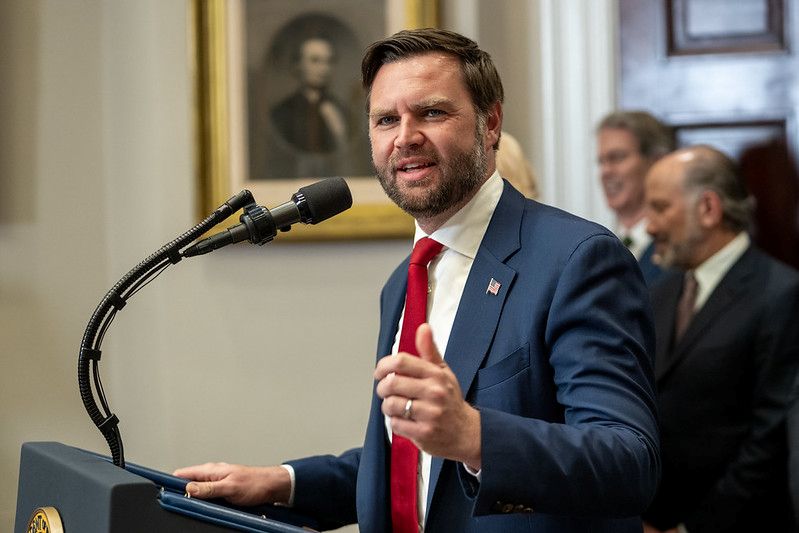
Vice President JD Vance has made the proposal a priority. The administration is drafting a rule to create a new category called "parent-based child care" within the CCDF — the federal childcare subsidy program created in the 1990s and administered by the Department of Health and Human Services. Under the draft language, "one married parent" could "receive C.C.D.F. assistance to care for their own child, while a spouse works at least 35 hours per week."
The subsidy currently averages about $9,000 per child annually. Families earning up to 85% of their state's median income are eligible, though some states set the threshold at 60%. The new rule wouldn't change those income caps. It would simply stop excluding parents who do the caregiving themselves instead of outsourcing it to a daycare center.
Roger Severino of the Heritage Foundation — who wrote the childcare section of Project 2025 — called the change "equal treatment" for stay-at-home parents. That's exactly what it is. The current structure operates on an assumption so bizarre it's almost never stated out loud: that caring for your own children doesn't qualify as childcare. You can get a government subsidy to pay a stranger to watch your kids. You cannot get one to do it yourself.
Critics are already lining up. Joshua McCabe of the Niskanen Center argued that "expanding the eligibility without increasing funding would mean more parents competing for the same dollars, and leaving more parents — particularly single working parents — worse off." The math sounds reasonable until you realize what he's actually defending — a system where 80% of recipient families are headed by single working parents, and the solution to that imbalance is to permanently exclude married families where one parent stays home. The fund is $12 billion. The question isn't whether the money exists. It's who the government has decided deserves it.
The rule includes guardrails. Unmarried couples would remain ineligible. Single non-working parents wouldn't qualify. The spouse has to work at least 35 hours a week. This isn't a universal handout — it's an extension of an existing subsidy to a category of family that was arbitrarily locked out of it.
The CCDF has operated for decades on the premise that childcare only counts when it happens outside the home. Every dollar the program spends reinforces that premise — pay a provider, get a subsidy; do it yourself, get nothing. Vance's proposal doesn't blow up the program. It just removes the one eligibility rule that made no sense to begin with.
The rule could take effect as soon as next year. Twelve billion dollars, and it took until 2026 for someone in Washington to notice that parents raising their own children were the only ones not invited to the table.