
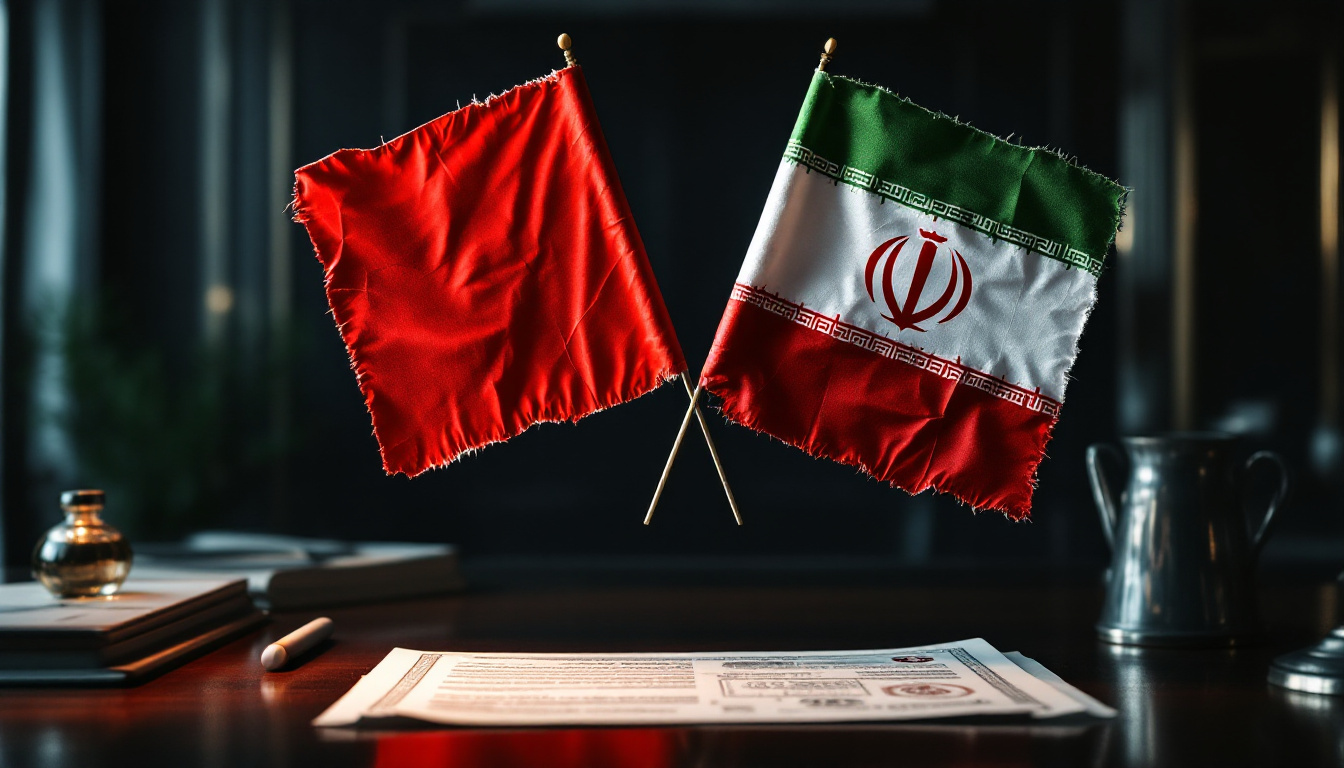
Peru didn't just sever diplomatic ties with Iran on September 2nd. They called the regime a "rogue terror state" in an official government communiqué — the kind of language diplomats usually reserve for UN cocktail hour whispers, not formal declarations. President Keiko Fujimori's government delivered the message through the Iranian embassy in Ecuador, since Peru apparently couldn't even be bothered to tell Tehran to its face.
That's the diplomatic equivalent of breaking up by text.
The statement itself read like a conservative wish list of Iran grievances. Peru cited the regime's "repression of peaceful protests," shutdowns of the press, discrimination against women, political persecution, disruption of navigation through the Strait of Hormuz, and obstruction of the International Atomic Energy Agency. The Fujimori government declared it had been "observing with increasing consternation the deterioration" of Iran's behavior, and "rejects in an equally energetic manner that Iran incites violence and escalates conflicts."
Keiko Fujimori, who took office in July 2026, is Peru's 10th president in 10 years — a stat that usually signals chaos, not clarity. But Fujimori has governed like someone who actually read the briefing book. Her father, former President Alberto Fujimori, was one of Latin America's most polarizing conservative leaders. Keiko appears to have inherited the instinct without the baggage.
The Iran problem in South America is not theoretical. In 2016, Hezbollah established itself as a political party in the Peruvian city of Abancay. By 2018, State Department counterterrorism official Nathan Sales was warning Congress directly about Iranian terrorist operatives operating inside Peru. In 2023, Iran cemented a drone deal with Bolivia, its most concrete military foothold on the continent.
So this wasn't Peru waking up one morning and deciding to pick a fight. This was a country that watched Iran's tentacles creep closer for a decade and finally said enough.
The broader context matters. Latin America has been quietly shifting rightward for years, and Iran's regional alliances have collapsed alongside that shift. Venezuelan narcoterrorist dictator Nicolás Maduro — once Tehran's closest friend in the Western Hemisphere, the successor to Hugo Chávez's anti-American project — was arrested. Bolivia's drone deal looks increasingly like a relic. Peru's break is the latest in a pattern of conservative and libertarian governments across the continent deciding that cozying up to the mullahs doesn't play well at home.
Fujimori also announced a new initiative called "Shield of the Americas," an anti-drug and narcoterrorism plan that positions Peru as a regional leader rather than a passive observer. The messaging is clear: we're not just walking away from Iran, we're walking toward something.
When America projects strength, smaller nations find the courage to act on what they already believe. Peru didn't need Trump to tell them Iran was a rogue terror state. They needed to know that saying it out loud wouldn't leave them standing alone.
The Strait of Hormuz disruptions continue. The IAEA obstruction continues. The women of Iran are still persecuted. The only thing that's changed is that fewer countries are willing to pretend they don't notice.