
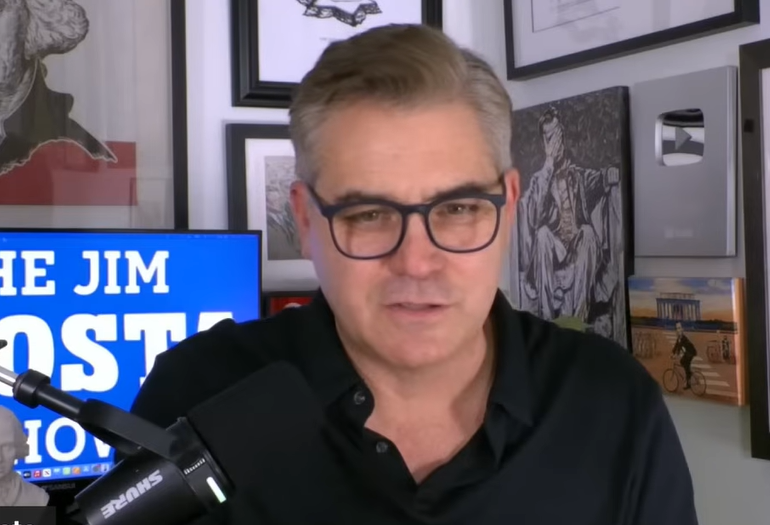
On the July 23 episode of his Substack show, Jim Acosta looked into his camera and told his audience that "we're seeing journalists being jailed" under the Trump administration. He then added, "I think they do want to put reporters, more reporters in jail."
No journalists have been jailed by the Trump administration. Not one.
Obviously when Acosta made this claim we checked it out. The result was clean. There is no list of imprisoned reporters. There is no case pending. Acosta invented an entire category of political prisoners on a live broadcast and nobody on set blinked.
The segment aired on MS NOW, formerly MSNBC, during a conversation with host Ali Velshi. Velshi set the table by comparing White House press briefings to authoritarian state media. "If your only job were to listen to what the White House press secretary says and report that to the people, that would be a little hollow, right?" Velshi said. "That would be the kind of thing that they do in authoritarian countries."
Acosta picked up the thread and ran with it straight past the facts. "Donald Trump needs to understand he is not Vladimir Putin and this is not Russia," Acosta said, before delivering the jailed-journalists line that has no basis in reality.
This is the same Jim Acosta who had his White House press pass suspended in 2018 after a confrontation during a briefing. He parlayed that incident into years of on-air martyrdom and eventually a career pivot to Substack after leaving CNN. The persecution narrative is not new. What's new is that he's now fabricating the persecution entirely.
There's a difference between aggressive press regulation and imprisonment. FCC Chairman Brendan Carr has been vocal about broadcast standards. The Justice Department and Pentagon have pursued leak investigations. Those are policy disputes. Jailing journalists is something else — something that hasn't happened and that Acosta provided zero evidence for, because there is none.
Acosta has been covering — or performing around — Donald Trump since the 2016 campaign trail. A decade in, he's moved from asking confrontational questions to stating fabricated conclusions. The progression tells you everything about where the incentive structure points: not toward accuracy, but toward engagement.