
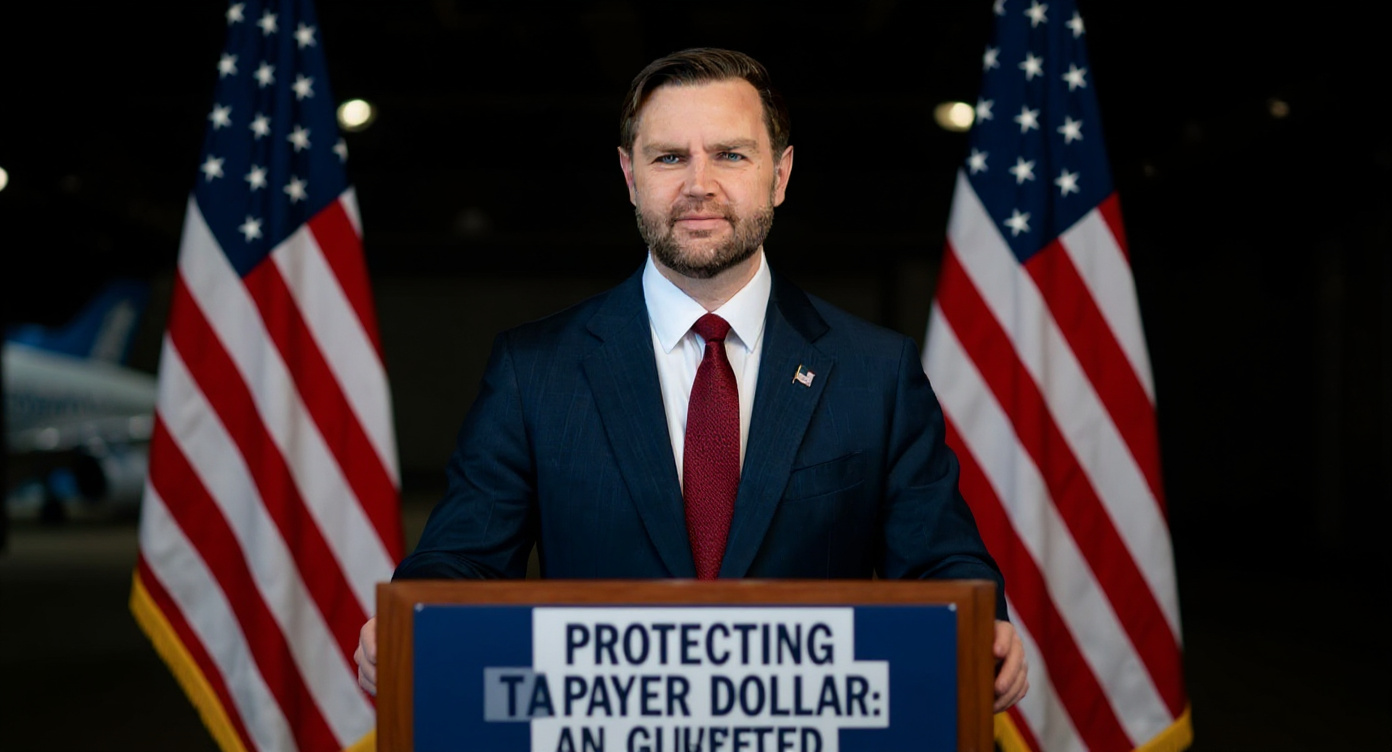
Vice President JD Vance just flew into Bangor, Maine, set up shop at Bangor International Airport with signs reading "protecting taxpayer dollars" and "fighting fraudsters," and turned a fraud investigation event into a full-blown midterm campaign rally. The man Donald Trump dubbed the "fraud czar" isn't playing defense. He's taking the fight to a blue state and daring Democrats to call it extreme.
Bold move. Going to Maine to talk fraud is like going to a vegan restaurant to order a steak. They don't want to hear it.
Vance didn't mince words from the stage. "The government wasn't going after fraud," he told the crowd. "And ladies and gentlemen, that changed the moment Donald J. Trump became the President of the United States." He called Maine the "bronze medalist" in fraud — behind only California and Minnesota — and claimed federal officials would find "hundreds of millions of dollars every single month" in the state. That's not a whisper. That's a declaration of war on Democrat governance.
This was Vance's first trip expressly billed as an Anti-Fraud Task Force event, and he picked Maine's politically competitive 2nd Congressional District for a reason. He was there to stump for former Governor Paul LePage, a Trump ally and sole Republican nominee vying to flip the U.S. House seat being vacated by Democratic Rep. Jared Golden. Vance pointed at LePage and told the audience, "Fraud has festered in Maine because this guy is no longer the governor of Maine."
LePage, for his part, matched the energy on social media: "Every dollar of fraud is a dollar stolen from taxpayers and not used to help those who truly need assistance." Simple. Direct. The kind of line Democrats used to pretend they believed.
The numbers back up the aggression. An HHS audit found $45.6 million in improper autism-related Medicaid payments in Maine, with the federal government moving to recoup $28.7 million of that as the federal share. Autism services costs in the state ballooned from $52.2 million in 2019 to $80.6 million by 2023. Dr. Mehmet Oz, the Centers for Medicare and Medicaid Services Administrator, called for corrective action. Democratic Governor Janet Mills called it a "political attack." Naturally.
Mills can call it whatever she wants, but since 2015, Maine's Attorney General has recovered over $17 million across 162 Medicaid fraud cases. That's not nothing — but it's also an admission that fraud has been a persistent problem under Democratic leadership. Maine's improper payment rate sits at 2.4%, below the national average of 3.2%, which Mills' defenders will cite. But Vance isn't interested in grading on a curve. He wants the money back.
The broader play here is obvious and brilliant. The 2026 midterms are coming, and the administration's economic message has been complicated by rising costs from the Iran conflict. So Vance is doing what any good attack dog does — he's finding a message that resonates with voters in their wallets. Government fraud. Your money. Being stolen. By bureaucrats who answer to Democrats.
The Maine primary is June 9, with seven Republicans and five Democrats vying for the governor's mansion alone. Sen. Susan Collins' Senate seat is considered one of the most competitive in the nation. Vance even praised Collins at the event, saying, "I almost wish that she was more partisan, but the thing I love about Susan is she is independent." Democratic Senate hopeful Graham Platner immediately jumped on the Collins comments on social media. Good luck with that strategy, pal.
Former Maine CDC director Nirav Shah, running for governor as a Democrat, fired off an email to supporters trying to frame the visit as toxic: "That is the record JD Vance is bringing to Maine on Thursday. That is the record the Maine Republicans hosting him are 'honored' to celebrate." Translation: we're terrified this is working.
Vance went to a blue state, stood on a stage at an airport, and turned a fraud briefing into a midterm battle cry. He didn't ask permission. He didn't soften the message. He called Maine a fraud factory and endorsed the Republican who wants to fix it. That's what an attack dog looks like when the leash comes off.