
In Mississippi, election officials have five business days after the polls close to keep accepting mail-in ballots. On Monday, the Supreme Court ruled 5-4 that federal law is perfectly fine with that arrangement. The case is Watson v. Republican National Committee, and its practical reach extends to 18 states and territories that operate similar grace periods.
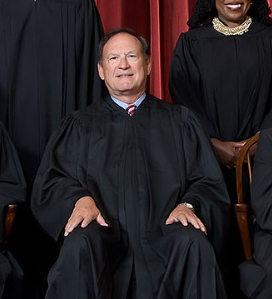
Justice Samuel Alito had three words for what the majority just did: opened Pandora's box.
The majority opinion, written by Justice Amy Coney Barrett and joined by Chief Justice John Roberts and the Court's three liberal justices — Sonia Sotomayor, Elena Kagan, and Ketanji Brown Jackson — held that federal election statutes do not set a deadline for ballot receipt. Barrett wrote that "the Election Day statutes require the electorate's choice to be made on Election Day. That occurs so long as Election Day is the deadline for individuals to vote — as it is in Mississippi." She added: "But the Election Day statutes do not set a deadline for ballot receipt, so they do not prevent Mississippi from counting ballots postmarked before Election Day yet received afterward."
The distinction Barrett drew is between casting a vote and receiving a ballot. Postmark it by Tuesday, and whether it shows up Wednesday or the following Monday, it counts. The RNC argued this effectively extends the election beyond the single Tuesday in November that Congress mandated nearly 200 years ago. The Court disagreed.
Alito, joined by Justices Clarence Thomas, Neil Gorsuch, and in part by Brett Kavanaugh, did not mince words. He warned that the "majority's holding spawns a slurry of troubling election-law questions and risks further undermining Americans' confidence in election integrity." He wrote that "for state legislatures trying to understand what the Election Day statutes allow, the majority's decision opens Pandora's box."
The fraud concern isn't abstract. Alito pointed to the structural vulnerability: when early returns show a tight race, a multi-day window for additional ballots to arrive creates precisely the kind of opportunity bad actors would exploit. Remove the Election Day finality requirement from federal law, his dissent argued, and you've removed a safeguard.
The numbers give his argument weight. Washington Secretary of State Steve Hobbs noted that more than 250,000 ballots postmarked on time arrived after Election Day in 2024 in his state alone. Mississippi election officials testified that processing approximately 200,000 mail-in ballots received before Election Day — plus thousands arriving on Election Day itself — all within a single day was operationally unworkable. Ballot processing can't begin until polls open. Each ballot requires name and address verification, precinct confirmation, and signature matching.
Mississippi's own Republican Attorney General, Lynn Fitch, threaded an interesting needle. She said "President Trump is right to prioritize improving public trust in our elections," while expressing hope the state legislature would amend the law to require absentee ballots be received on the same day as in-person votes. In other words: the Court got this wrong, but it's our job to fix it now.
President Trump called the ruling a "tremendous loss" and doubled down on pushing Congress to pass the SAVE America Act, which would end nearly all mail-in balloting and require additional identification such as a passport or birth certificate. Trump had previously signed an executive order requiring Election Day ballot receipt, but lower courts blocked it.
The Voting Rights Lab's CEO, Samantha Tarazi, called the decision "a major setback for the Trump administration." That framing tells you everything about what this case was really about. The RNC and the Trump campaign filed challenges to grace periods before the 2024 election. Lower courts dismissed the lawsuits. The 5th Circuit Court of Appeals sided with Republicans. And now the Supreme Court has reversed that, five months before the 2026 midterms.
Barrett was appointed by Trump. Roberts was appointed by George W. Bush. Both joined with the liberal bloc. Three Trump-appointed justices dissented.
Eighteen states keep their mailboxes open past Election Day. The Court just told them that's fine. Alito told everyone else what "fine" might cost.