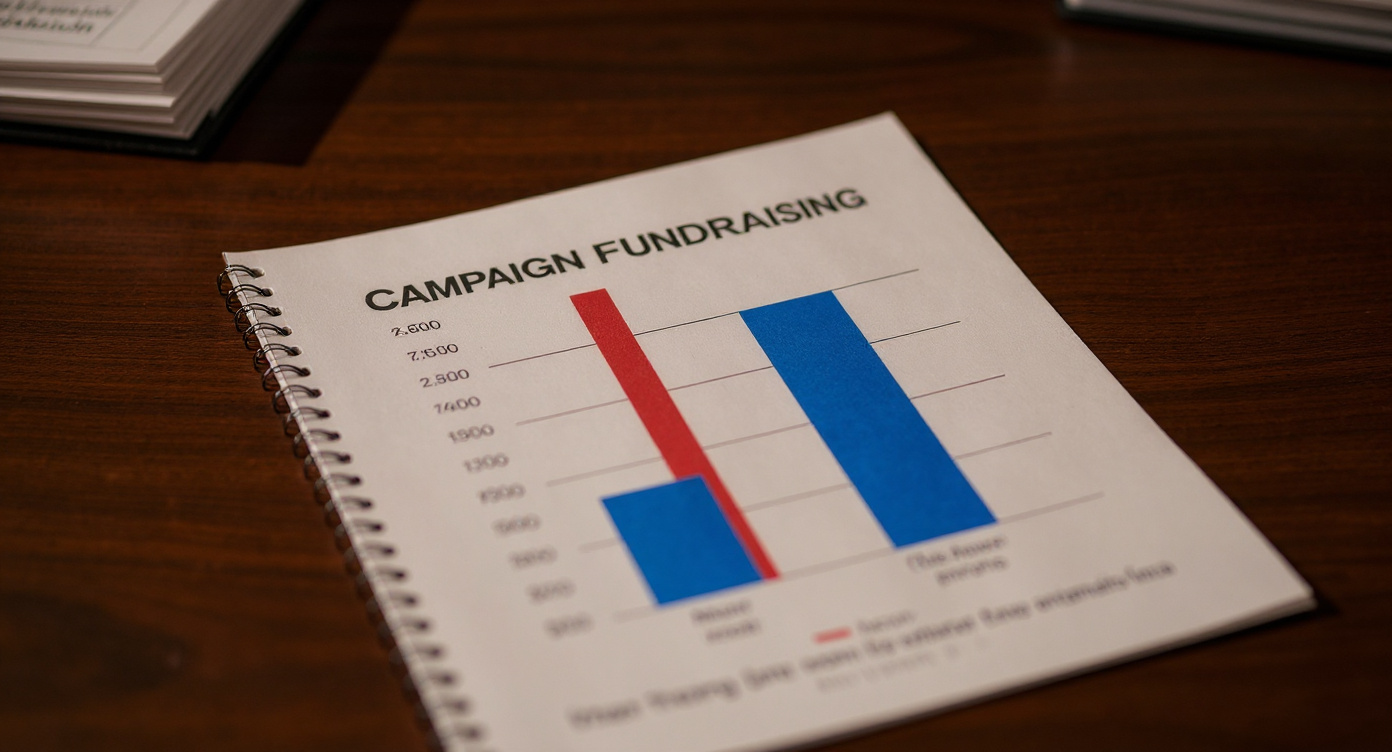

A score of 463. That's what American 15-year-olds managed on the PISA 2025 math assessment — a test given to 760,000 students across 91 countries to measure whether kids can actually apply math to real-world problems. The number 463 is exactly the OECD average. Not above it. Not meaningfully close to the top. Dead average.
China scored 612.
The PISA 2025 results, published this month, tested roughly 33 million 15-year-olds worldwide on mathematical reasoning — not rote memorization, but the ability to think through problems. China took first place. Singapore came second with 563. Macao, Taiwan, Japan, Korea, Hong Kong — all in the top six.
The United States came in at 27th. Behind Canada at 11th. Behind the United Kingdom at 10th. Behind Estonia, which most American students would need three guesses to locate on a map.
And the trend line is worse than the snapshot. Across OECD countries, average math scores have dropped 22 points between 2015 and 2025 — the equivalent of just over one full year of learning, gone. A decade of educational policy and spending, and the net result is that the average kid knows less math than the average kid ten years ago.
China's score came from students in Beijing, Shanghai, Jiangsu, and Zhejiang — four provinces, not some cherry-picked academy for gifted prodigies. Four regions of a country that decided math matters and then taught it like math matters. Meanwhile, American school boards spent the last decade debating whether advanced math classes are "inequitable" because not enough students from the right demographic categories were enrolling in them.
The PISA data also found that students spending four or more hours daily on digital leisure activities scored lower and reported a weaker sense of belonging at school. Moderate screen use correlated with better outcomes than either zero use or heavy use. So the answer isn't "more iPads in classrooms," which has been the default American education strategy since roughly 2014.
The education establishment will point to funding. They always point to funding. The United States spends more per pupil than nearly every country on this list. We outspend Estonia by multiples. We outspend Japan. We outspend Korea. The gap between American spending and American outcomes is not a mystery — it's a receipt.
What those countries didn't do is restructure their math curricula around social-emotional learning goals, replace calculus tracks with "data science" courses designed to boost equity metrics, or allow teachers' unions to treat school closures as a professional development opportunity. They taught math. Their students learned math. The assessment confirmed it.
Twenty-seventh. A 149-point gap between American students and Chinese students. Not a gap you close with a new federal initiative or a revised Common Core framework. A gap that reflects what a country decides to prioritize — and what it decides doesn't matter as long as the right words appear in the mission statement.
The OECD average is 463. We hit it exactly. In a country that spends like a leader, we perform like the middle of the pack.
That's not a ranking. That's a report card.