
Everyone is watching the Strait of Hormuz. Nobody is talking about Isfahan.
Deep inside underground tunnels at Iran’s nuclear facility in Isfahan — with additional stockpiles split between Fordow and Natanz — sits 450 kilograms of uranium enriched to 60 percent purity. Weapons-grade requires 90 percent. The enrichment from 60 to 90 is the fastest, easiest step of the entire process. American and Israeli analysts estimate Iran could reach weapons-grade in a matter of weeks — possibly less — once the technical decision is made to do it.
Operation Epic Fury destroyed 90 percent of Iran’s ballistic missile launchers and effectively ended Iran’s conventional military capability. It did not destroy that uranium. And as of this week, the Trump administration is actively discussing what to do about it.
The options being considered come down to two paths. Option one: send in special forces to physically remove the material from Iran entirely. Option two: send in nuclear experts to dilute the stockpile on-site, rendering it too low-grade for weapons use without extensive re-enrichment.
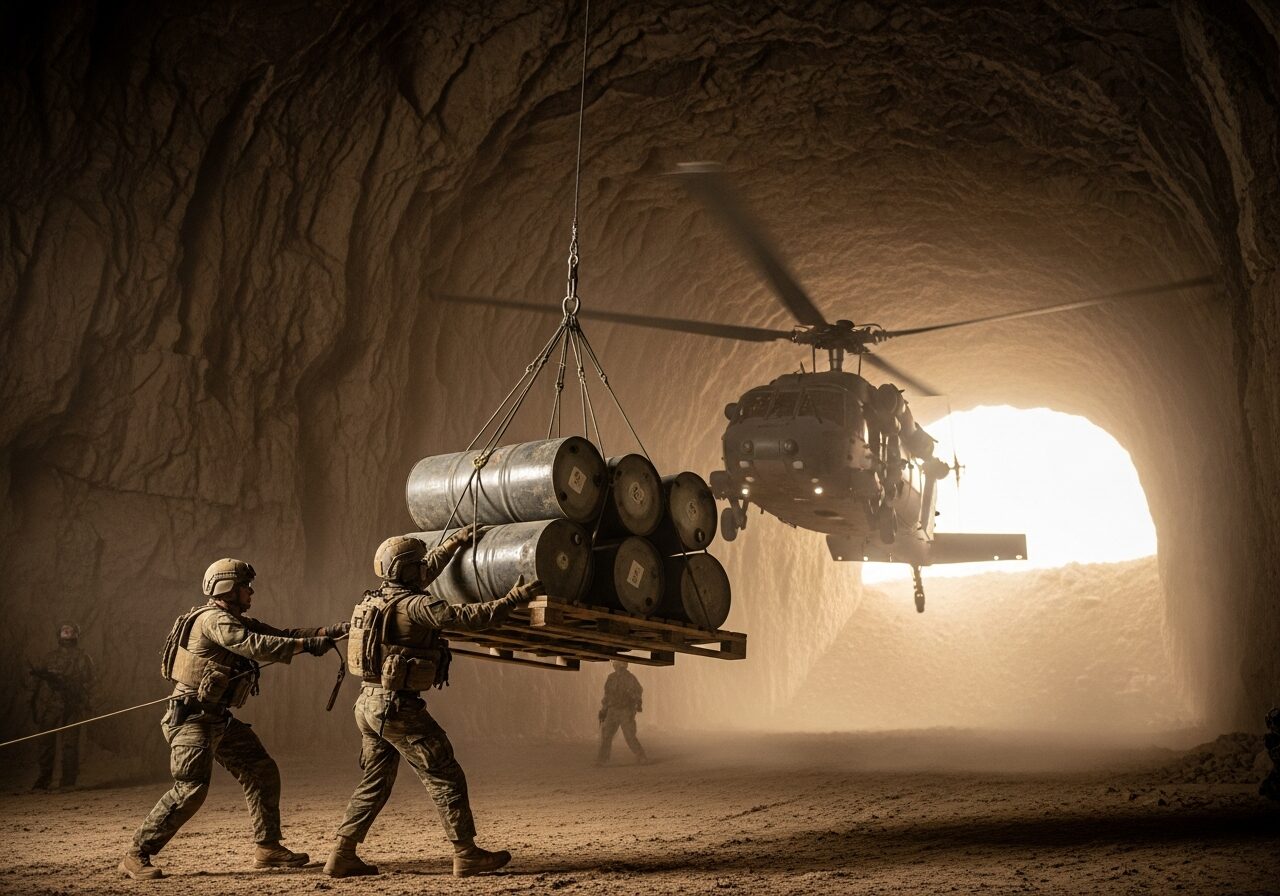
Both options require American personnel on Iranian soil. Both are extraordinarily complex. And one of them is already being called “the mother of all commando raids” by analysts who have reviewed what it would take.
Delta Force and SEAL Team 6 — the two American special operations units with the most relevant training — have both conducted counter-WMD exercises for nearly a decade under U.S. Special Operations Command’s lead role for the Pentagon’s counter-WMD mission. They train specifically for scenarios involving nuclear material, underground facilities, and hostile environments. This is the mission they were built for.
But the operational scale is daunting. CNN reported that capturing Iran’s highly enriched uranium would require not just a core special operations team, but dozens to potentially hundreds of additional troops to secure the surrounding area — particularly given that the Iranian military has not fully collapsed and still controls territory around these sites. Logistical support for handling nuclear material deep underground adds another layer of complexity that conventional commando operations don’t face.
The dilution option carries different risks. On-site dilution is technically feasible but requires time — time that a special operations team would need to hold a location inside a hostile country while nuclear scientists do their work.
This is the decision that determines whether the Iran operation actually achieved its strategic objective. Destroying Iran’s military infrastructure while leaving 450 kilograms of near-weapons-grade uranium in the hands of a new Supreme Leader who reportedly opposed his father’s religious prohibition against nuclear weapons is not a complete victory. It is a paused one.
Israel understands this, which is why Israeli officials have been pushing back against Trump’s “very complete” framing and quietly advocating for an extended air campaign to destroy the nuclear sites before any ceasefire. The air option is the alternative to the ground option — both have the same goal.
Trump’s decision here is the most consequential one remaining in the Iran operation. Every other question — Hormuz, the ceasefire terms, Mojtaba’s government — is secondary to the uranium question. A new Iranian Supreme Leader who inherits a functional nuclear weapons program in weeks is a fundamentally different threat than one who doesn’t.
The special forces option would be the most complex American military operation since the bin Laden raid. The air option risks missing what’s buried underground. The do-nothing option means accepting a nuclear-armed Iranian junta led by a man with personal revenge as his primary motivation.
Mark my words: the uranium question is what Trump is actually deciding right now. The Hormuz coverage is the headline. Isfahan is the story.