
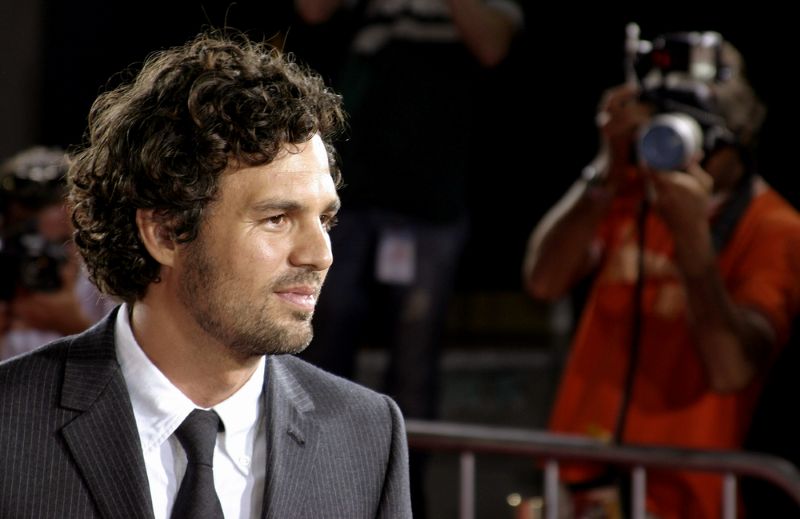
Mark Ruffalo went on Instagram on Friday to weigh in on a $111 billion corporate merger between two Hollywood Studios, Sydance and Warner Bros. Discovery, and walked out the other side of the post with a formal antisemitism accusation from one of Hollywood's biggest studios.
The target was Safra Catz, Oracle's Executive Vice Chair, who is Israeli-American. Ruffalo shared video of her discussing Oracle's military technology, then added his own commentary: "Look how she revels in what we now have come to see as a genocide, which was built on an apartheid system of oppression powered by Oracle."
Word for word. From a man with an Oscar. On a verified account. Singling out an Israeli-American woman by name, accusing her of taking pleasure — "reveling" — in genocide, then tying it to a $111 billion corporate merger between Paramount Skydance and Warner Bros. Discovery. The company is run by David Ellison. His father is billionaire Oracle founder Larry Ellison, who is Jewish and owns 50% of Paramount Skydance.
An Israeli-American executive. A Jewish family. Genocide. On Instagram.
Paramount Skydance responded in writing: "We are, as always, troubled when antisemitic tropes are invoked in purported service of a business dispute." Read it carefully: that is the company's legal team placing the word "antisemitic" directly next to Mark Ruffalo's name, in a formal statement, because they had no other honest description for what he posted.
His response came fast. "The accusation that I am antisemitic is appalling and fundamentally dishonest," he posted on X. "Criticizing the actions of the Israeli prime minister, a military technology contract, or the executives who supply it is not the same as criticizing Jewish people."
Here is what he actually did: he pointed a camera at a specific Israeli-American woman and wrote that she was reveling in genocide. He connected her employer's merger to that genocide based on who her employer's family is. Identity was the throughline. Business terms were decoration. Her heritage was the evidence. Her "reveling" was the charge.
This is the structure of the trope he deployed: take an Israeli-American in a position of power, infer from their identity that they carry loyalty to Israeli military interests, and accuse them of celebrating Palestinian deaths. Dual loyalty dressed in humanitarian language. When the framework a person absorbs tells them that Israeli-American identity and military complicity are inseparable, the leap from "this executive is Israeli-American" to "this executive revels in genocide" feels like clear thinking. It is the opposite.
Ruffalo added his standard disclaimer: "My views come from my own political convictions and should never be interpreted as hostility toward Jewish people, for whom I have deep love and respect." He described scrutinizing the Ellisons as "fair and necessary."
His convictions are exactly the problem.
Ruffalo has spent years absorbing the vocabulary of the radical anti-Zionist left so completely that he can no longer locate the line between political criticism and ethnic targeting. He has adopted a framework in which Israeli identity and moral culpability are treated as linked — which means when he sees an Israeli-American executive discussing military technology, what registers to him is a collaborator in genocide. He was taught to see it that way. Systematically. And he never noticed the learning happening.
Paramount and California officials were scheduled this week to discuss a potential antitrust settlement. California and eleven other states, including New York, Arizona, and Minnesota, have filed challenges to the merger. Those are real legal questions about media consolidation affecting roughly 4,500 direct jobs and thousands of associated positions.
Ruffalo bypassed all of it. He went straight to the Israeli-American woman reveling in genocide.
His defense is that his politics are in the right place. His politics are the condition that produced this. He is so deep inside a movement that treats Israeli identity as disqualifying that he deployed a textbook antisemitic accusation — the Israeli-American as agent of Israeli military violence, identified by heritage and charged with celebrating mass death — and responded to the backlash with genuine outrage.
That outrage is the tell. After years of this, Ruffalo has lost the ability to distinguish between opposing a government and targeting a person for their ethnicity. The conviction that he is too righteous to be antisemitic is precisely what leaves him unable to recognize it when he is.
He called it political criticism. Paramount called it an antisemitic trope. One of those descriptions requires willful blindness to the words he actually used.