

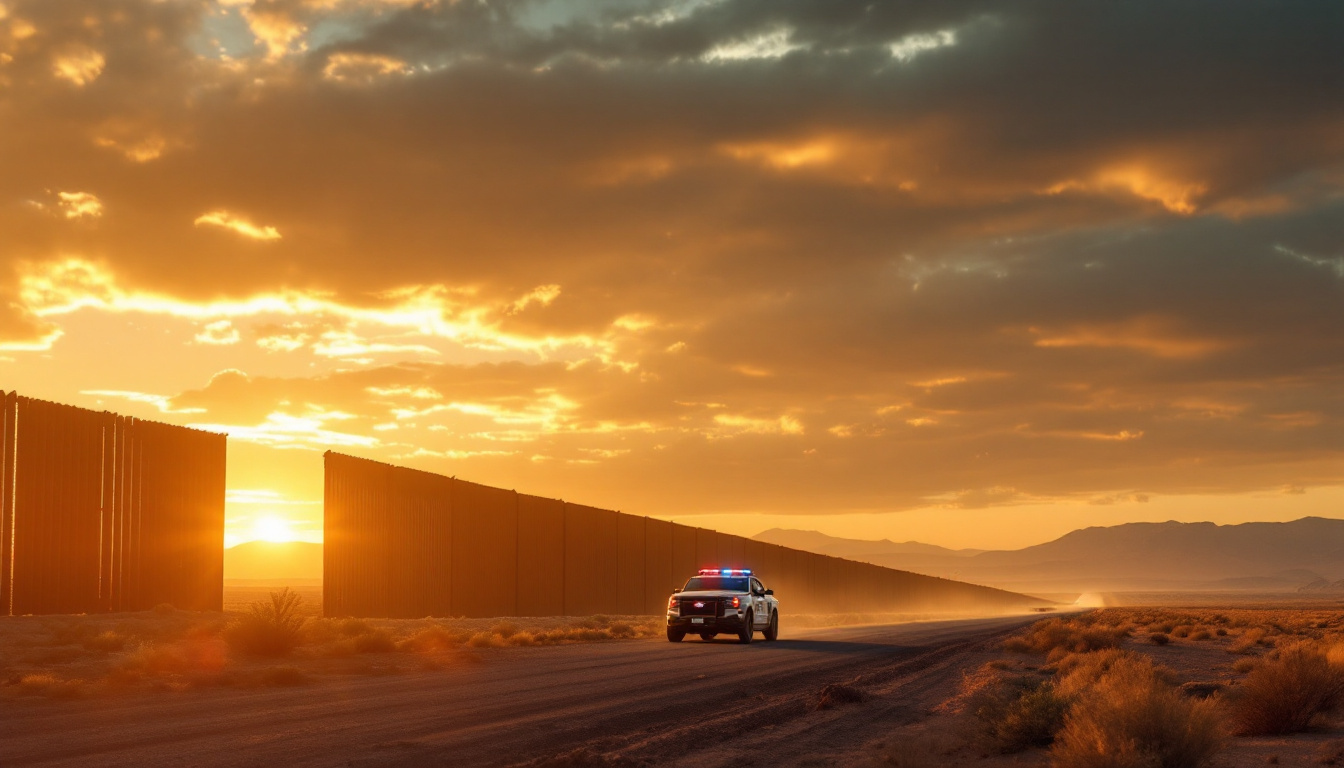
In October, Border Patrol agents in McAllen, Texas arrested a Mexican national who'd been a self-identified member of the Paisa gang since 2017 — a man with a prior deportation and a human-smuggling conviction already on his record. He walked right into a wall of enforcement that didn't exist two years ago.
That's the difference between a border and a suggestion.
U.S. Customs and Border Protection released the October numbers on Saturday, and they're historic — again. CBP recorded just 27,890 nationwide encounters, the lowest ever to start a fiscal year. Southwest border apprehensions by Border Patrol came in at 8,288 — a 95% drop from the Biden administration's monthly average. Compared to the Biden-era peak in December 2023, that's a 97% decline.
October also marked the 18th consecutive month of zero releases at the border. Eighteen months. Not a single one.
Homeland Security Secretary Markwayne Mullin put it plainly: "President Trump unleashed the full strength of DHS to secure the border and enforce the law. The results speak for themselves."
They do. The question is why nobody in mainstream media seems interested in reading them.
CBP Commissioner Rodney S. Scott added context that matters: "We know more about who and what is entering our homeland than at any time in our nation's history." That's not bluster — it's backed by the seizure numbers. Combined drug seizures of cocaine, methamphetamine, heroin, fentanyl, and marijuana jumped 44% from September to October. Total drug seizures were up 13% compared to October 2024. In Arizona, CBP officers pulled 112 pounds of fentanyl out of plastic folding chairs in the bed of a pickup truck — over 300 packages discovered after a K9 alert.
The specifics tell the enforcement story the aggregate numbers can't. Methamphetamine seizures hit 14,745 pounds in October, a 59% increase from September. Cocaine: 9,032 pounds, up 60%. Heroin: 246 pounds, a 95% spike. Marijuana came in at 14,748 pounds, up 29%.
Fewer people crossing illegally. More drugs intercepted at the ports of entry where they belong. That's what a functioning border looks like.
The usual objection is that lower crossings just mean the cartels shifted routes. The seizure data answers that before the question finishes. If the cartels were successfully finding new paths, the drug numbers would be falling, not surging. What's actually happening is exactly what the enforcement model predicted: shut down illegal foot traffic, force the product into chokepoints, and catch more of it.
Secretary Mullin framed the trajectory: "Under President Trump's leadership, we will continue to deliver the most secure border in American history and save American lives." That's not a campaign promise anymore. It's an operational report.
CBP also processed $391 billion in imports in October and identified $26 billion in duties for collection — a reminder that border security and trade enforcement aren't competing priorities. They're the same mission run by the same agency.
As WLT Report noted, the sustained results prove the crackdown isn't a one-month blip. It's structural. Month after month the numbers come in, month after month they're historic, and month after month the coverage lands somewhere between buried and nonexistent.
Eighteen consecutive months of zero releases. A 95% drop in illegal crossings. The lowest fiscal-year start ever recorded.
The numbers came out on a Saturday.