

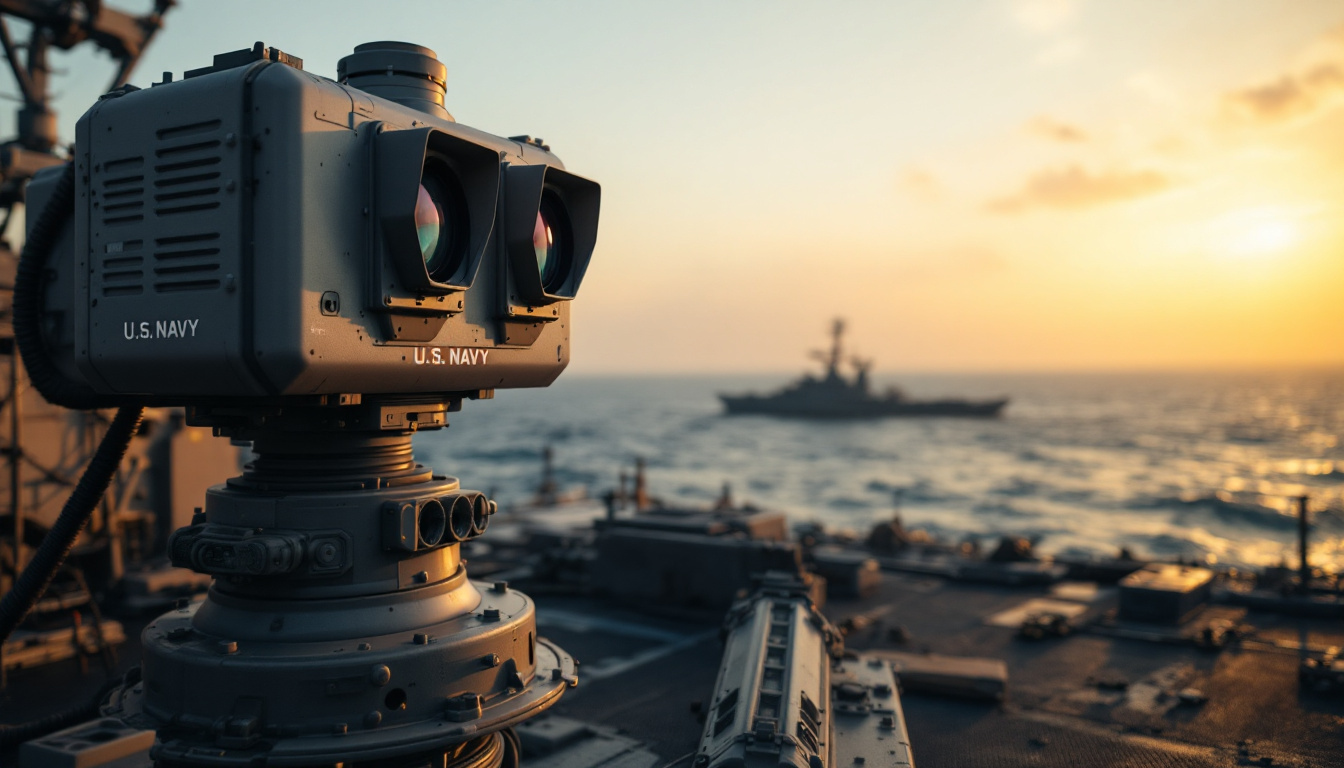
Somewhere in the Strait of Hormuz, a United States Navy sailor is pointing an infrared beam at an incoming Iranian drone using a reconfigured Xbox game console controller. The drone's sensors go dark. Then the drone itself explodes. Cost to the American taxpayer: a fraction of what a conventional missile intercept runs.
The Pentagon spent fifty years getting here. Turns out the wait was worth it.
American directed-energy weapons — military-grade lasers invisible to the naked eye — have moved from the experimental phase into active operational use against Iranian targets. Not just in the Strait of Hormuz, but inside Iran itself, striking drones, cruise missiles, weapons stockpiles, and infrastructure.
Mark Neice, President of Directed Energy Consultants, laid out the capability in terms even Congress could understand. "We can very specifically track and target drones and put the spot exactly where we want it, in order to disable its sensors or kill the drone itself," Neice said. Track it, target it, kill it — at the speed of light, with a firing signature so low the enemy doesn't know where the shot came from.
That last part matters. A Patriot missile battery announces itself every time it fires. A laser doesn't. The enemy loses hardware and has no return address to send the complaint to.
The cost math alone should make every fiscal conservative in Washington pay attention. Every interceptor missile the Navy fires costs anywhere from hundreds of thousands to millions of dollars depending on the system. The Houthis and Iranians figured out that equation a long time ago — launch enough cheap drones and cruise missiles, and you drain America's magazine faster than we can resupply it. Lasers flip that script. The per-shot cost drops to almost nothing. The magazine doesn't run dry because the weapon runs on electricity, not explosives. Fire all day, every day, as long as the ship has power.
And then there's the Xbox controller detail, which sounds like a punchline but is actually brilliant engineering. Younger sailors grew up with those controllers in their hands. The learning curve for operating a directed-energy weapon system goes from months to days when the interface is something the operator has used since middle school. The Department of War — yes, that's the name again after the Trump administration restored the original title — specifically chose the Xbox platform because it made the systems intuitive for the generation actually fighting the wars.
The strategic picture here is bigger than one weapons system. Iran has built its entire regional strategy around cheap, expendable drone swarms and cruise missiles. That strategy assumed America would keep playing the old game — burning million-dollar interceptors on thousand-dollar threats until the math broke. Directed-energy weapons don't just change the math. They eliminate it.
Iran launches a swarm of fifty drones at a Navy vessel. Under the old model, that's fifty interceptor missiles — assuming you have fifty left in the vertical launch cells. Under the new model, that's fifty invisible laser shots at effectively zero marginal cost, fired faster than the drones can close the distance.
The program took fifty years to mature, spanning administrations that alternately funded, defunded, overpromised, and underfunded it. The fact that it reached operational deployment under an administration that renamed the Defense Department back to the Department of War tells you something about the posture shift. The previous crowd wanted deterrence through diplomacy. This crowd wants deterrence through capability — the kind where your enemy's weapons start exploding and nobody can prove who did it.
Neice's company consults on directed-energy applications across the military, and his assessment wasn't hedged. The technology works. It's deployed. It's killing Iranian hardware right now. Not in a lab. Not in a test range in New Mexico. In the Strait of Hormuz and inside Iranian territory.
Fifty years of development. A weapon that fires at the speed of light, costs almost nothing per shot, leaves no signature, and is aimed by a twenty-two-year-old sailor using the same controller he played Call of Duty with in high school.
Iran spent billions on drone swarms. The counter-weapon runs on electricity and a gaming peripheral.